Strategies for Designing and Installing Digital Art at Hotels
#6 Digital interactive art – technology for tomorrow'due south hotel
Technology is shaping the style in which hotel buildings are built and designed. Inside the hotel, engineering is altering how guests use and journey through spaces also as how they view interior design. In our latest article in the Hotel Designs Lab series, Ari Peralta , Founder of Arigami , explores the ascension of digital, generative and interactive art; a new genre that has the potential to transform guest experiences…
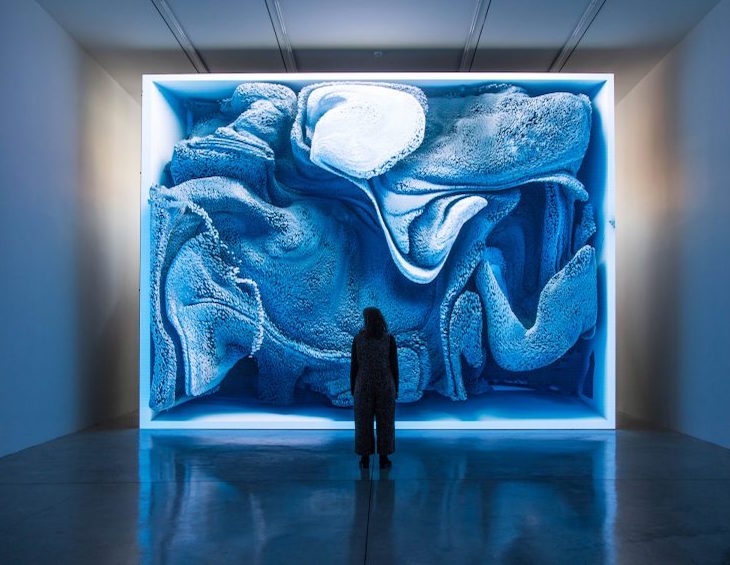
Over the last 10 years, there has been a substantial growth of civilization as an feel. The shift from an analog to a digital society has drastically transformed the way in which we create, appoint with and capeesh fine art. In contrast with more static art forms, generative and interactive art pieces let viewers to step in, respond to and shape the artwork in their own mode, or exit backside a trace of their experience.
Meet out experts:
An introduction to generative and interactive fine art
Art is something we exercise, a verb. It is an expression of our emotions, imagination, and desires, but it is even more than personal than that: it is about sharing the way we connect with the world, which for many is an extension of their identity.
Immersive art typically describes installations that envelop the viewer, surrounding them in a multi-sensory environs. Since the development of installation art in the 1960s, artists have experimented with different immersive forms every bit a fashion to directly involve participants. The evolution of technology has connected walking hand-in-mitt with progressive artistic concepts and has changed the way art is created and shared, enabling groundbreaking artists and their innovative expressions to proceeds expanded access to whole new audition groups beyond the conventional boundaries of the art world.
Carla Rapoport, founder and executive director of Lumen Fine art Projects, has championed art and engineering science globally. Her arrangement celebrates artists creating art with technology through the prestigious Lumen Prize for Art and Tech. She founded the prize and the business because she felt there was a huge lack of agreement and appreciation for the ability and energy of art created with tech in the gimmicky art world.
Generative and interactive art uses digital processing, computational math and code to transform imagery or make it responsive to environments and views. "Generative fine art is a style of art which uses algorithms and computing power to create a constant flow of images which never echo," explains Rapoport. "When you lot purchase generative art, yous are ownership a scrap of hardware which has been programmed by the artist to create something unique and never-ending". Carla shared this quote from the blogger Jason Bailey: 'Generative art takes full advantage of everything that computing has to offer, producing elegant and compelling artworks that extend the same principles and goals artists have pursued from the inception of modern fine art.'
One of Lumen'south brightest stars is world-renowned artist and 2019 gold winner Refik Anadol, a Turkish-American new media creative person and designer. His projects consist of data-driven car learning algorithms that create abstract, dream-alike environments. His piece of work 'Melting Memories' debuted new advances in technology that enabled visitors to experience aesthetic interpretations of motor movements inside a homo encephalon.
The transformed role of the observer
Cosmos is no longer solely understood as an expression of the artist's inner creativity, just likewise as a result of the collaboration betwixt creative person and observer.
According to New York-based artist Daniel Kersh, it'southward important to distinguish generative art from other rule based art forms like electronic art, computer art, digital art, evolutionary based art, robotic art, and virtual reality art, where an autonomous system may not be nowadays.
At Studio Daniel Kersh, the artists use generative tools to create site-specific installations, artworks, and performances exploring conditions of consciousness, perception, and sensation. At the foundation of all of their work is an invitation to a meditative space and an opportunity for moments of transcendence.
In terms of technology, they utilise game engines, 3D modelling, animation, VFX, and rendering software as well as artificial intelligence and machine learning. "Today's engineering science also allows us to pre-visualise artworks for clients in a mock up space before the installation, reducing time needed on-site," adds Kersh. " Interfaces, computers and sensors can respond to human, bodily elements such every bit temperature, proximity and motion to create immersive light art and kinetic sculptures."
Interfaces, computers and sensors can reply to homo, actual elements such as temperature, proximity and motion to create immersive light art and kinetic sculptures.
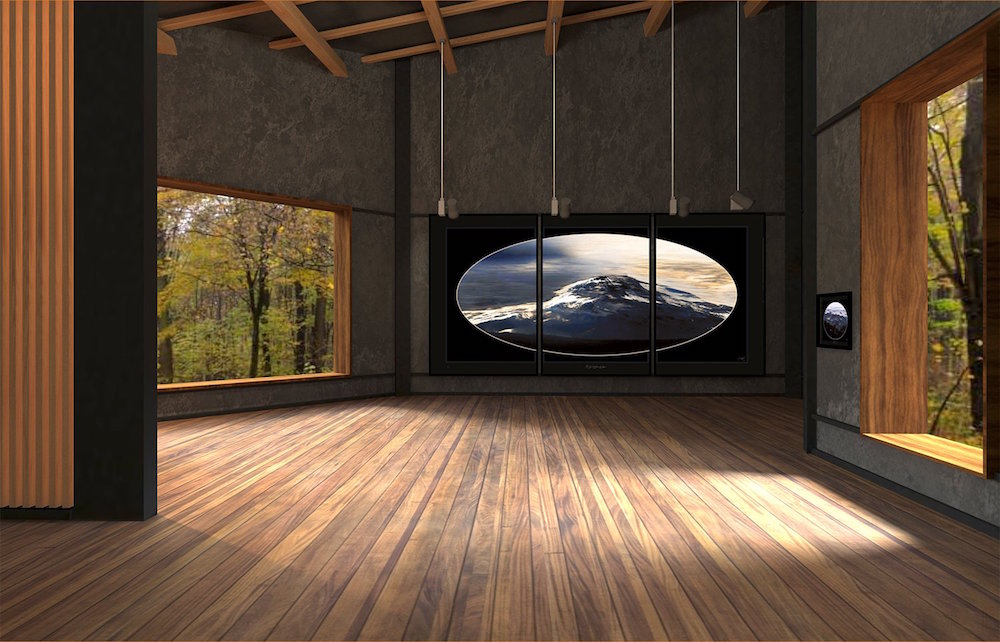
Image caption: 'Internal Visions' by Daniel Kersh. | Paradigm Credit: Daniel Kersh Studios
Each piece from Studio Daniel Kersh is rooted in meditation practice and focused on viewer wellbeing and impact. Kersh discovered generative art to be inherently meditative considering of its nature to constantly transform and evolve. Information technology rises and falls, creates and disintegrates, and weaves in and out of chaos and synchronicity.
Interactive art, a vehicle to drive guest bookings
Non all interactive art is the same. Imagine giving hotel guests the power to slow downwardly and become transported by artistic statements that seamlessly marry applied science and design to create a moment of mindfulness. For a great example, look no farther than Daniel Kapelian, Creative Director at OMA Infinite.
OMA Space is an art and design studio based in Seoul. Advocating a return to nature and the embodiment of both Eastern and Western sensibilities, the studio produces piece of work spanning the boundaries of gimmicky fine art and design, immersive installations and garments.
"Our work blends tradition with innovation based on the acquisition of both primitive techniques and digital tools, with a priority emphasis on sustainable coexistence between humanity and nature throughout its pattern process," explains Kapelian.
Originally from France, Kapelian works equally an art director and in music and motion-picture show production. Through many design disciplines, he and his squad get beyond the usual by experimenting with other fields of contemporary art such equally installations and interior design objects.
Drawing inspiration from the irksome walks of Zen Buddhist monks effectually pagodas, 'Slow Walk' invites visitors to take role in a ritual walk that brings the participant into more intimate contact with their deepest, most interior cocky.
A double-spiral path is laid across a 100 foursquare-metre circular site designed to process the walk barefoot and in slow motion from the border to the centre and back. From rough to delicate. The first-step sections of the spiral path brainstorm on rough mineral textures meant to awaken the senses, to stimulate the feet and total attention, focus, and equilibrium. Equally the walk progresses, the textures go increasingly softer and lighter. The concluding sections finish on vegetal textures giving a pleasant and delicate sensation.
"The deadening-paced walking movement is naturally encouraged through the lights that guide the manner together with the synchronised audio," says Kapelian, whose his mission every bit an creative person is to address the matters of humankind'south disconnectedness from the harmonising power of nature.
Ultimately, hotels must broaden their mission. Nosotros have arrived at a time when most people consider a hotel beyond a place to slumber. Hotels must get more creative at enriching experiences, and office of that effort means considering the art on view, the programming supporting information technology, as well as the hours of operation.
When considering generative and interactive art, location, architecture and design all matter, and tin descend into a meaningless void if they don't provide the foundation for truthful human interaction. The highest goal is a shared experience, and the best hotels that already know how to capture that magic should be the ones investing in interactive installations.
This poly-sensorial experience is an inner-journeying toward a solitary exploratory moment: the spiral returns us to ourselves to accomplish life's essential land of sensation.
Artists are now leveraging tech and science to improve guest wellbeing
Information technology's no surprise in today'south climate that people find travel stressful, whether it'due south for business or pleasance. "Providing the healing aspects of generative art is an unobtrusive way to show that the hotel cares about its guests' wellbeing," adds Rapoport. "It sets the hotel out as a place for recovery after a long trip or even a long day."
Therein lies the opportunity for hospitality designers. Recall beyond sensors and footstep into the realm of health-driven biofeedback art experiences. This subgroup of experiential artists with an added sensitivity for mental health and wellbeing, are pushing frontward with truly remarkable and transformative works.
Mexican-Canadian A.I. creative person Isabella Salas exemplifies this curious new crowd of hybrid creatives who are interweaving biofeedback technologies into the mix to further elevate fine art experiences. "For me, the excitement of generative art is directly continued to biometrics and the human beefcake and functions" says Salas. "Generative art opens another unexplored dimension – it relates reactions, the get-go of all, the interconnection, the infinite possibilities, the never ending wonder we could experience in every given second."
Afterward five years of working with this medium, she feels generative art simply helps guests contemplate, absorb, regenerate, relearn and get infinite with it. "What is non heady almost that," she asks. "Generative art creates an opportunity to creatively interact and engage with data. It can be used to promote appointment, play too as a sense of joy. With added biofeedback, generative art can also help united states of america to visualise our internal states and bring more sensation to them. It's possible for generative fine art to be a powerful gateway for discovering the inner cognition of our own minds and bodies."
"Many artists and fine art professionals are transforming the art world by leveraging applied science equally an art and pattern medium." – Ari Peralta, Founder, Arigami.
Generative art installations typically involve a lot of spectacle and are highly attractive to visitors. They bring people in, invite them to stay, and can turn a waiting infinite into a destination. Generative art can produce awe and wonder and provide an elevated, ethereal, guest feel. Information technology could potentially offer many more benefits including helping guests sympathise their own internal biology while settling in a at-home, relaxed, and stimulating space.
Why hotel brands and designers should consider integrating interactive and generative art installations
Over the final two years, our world has turned to digital experiences at exponential speed. No market has captured this transitional time period better than the art scene. During the heat of the recent pandemic, Hotel art collections became a more of import chemical element in luring the public to visit restaurants, bars, and other amenities. Even if a hotel could only operate at a percentage of occupancy, the artworks served to keep locals and tourists crossing the threshold.
Interactive art installations point to a new era and are attestation to the continual evolution of art, technology and hotel pattern. Many artists and art professionals are transforming the art earth by leveraging engineering as an art and design medium, allowing them to create striking, immersive, and highly engaging fine art pieces that are new and multi-disciplinary installations. Though conventional mediums similar painting and sculpture withal account for a big function of the artistic work plant in hotels, the interactive art installation genre is certainly growing and worthy of your attending.
Main image caption: 'Melodic Memories' by Refik Anadol. | Image Credit: Lumen Arts Prize
Source: https://hoteldesigns.net/hotel_designs_lab/6-digital-interactive-art-technology-for-tomorrows-hotel/
0 Response to "Strategies for Designing and Installing Digital Art at Hotels"
Publicar un comentario